

Steer by Missy Higgins
Steer—the lead single from Missy Higgins' second album On a Clear Night—is a song about clarity, agency, and the courage to take control of your own direction. Written after a moment of stillness on a beach in Broome, WA, it emerged from Higgins looking up at the southern sky and suddenly feeling the smallness of life and the urgency of living it fully.
Released in 2007, the song became Higgins' second number-one single in Australia and remains one of her most enduring anthems. Its message is direct: life is short, and you have the power to steer your own course—away from compromise, toward what feels true.
At the heart of Steer is a refusal to be passive. Higgins' lyrics move from self-doubt to self-possession, from feeling lost to claiming navigation. The song's bright, driving energy mirrors its lyrical resolve—it doesn't ask permission; it simply moves forward.
For Higgins, who had spent much of her early twenties under the pressure of sudden fame, Steer marked a turning point: a decision to reclaim her path, her voice, and her sense of purpose. It's a song that refuses to settle, and in doing so, it invites the listener to do the same.
Steer remains a statement of intent—personal, powerful, and unapologetically hopeful.
Missy Higgins
Melissa Morrison Higgins is one of Australia's most beloved singer-songwriters, known for her emotionally honest lyrics, distinctive voice, and ability to translate personal experience into universal feeling. She first came to national attention in 2001 when her sister entered her song "All for Believing" into Triple J's Unearthed competition—a track she'd written at seventeen that became one of the station's most-requested songs.
Her debut album, The Sound of White (2004), became the second-best-selling Australian album of the 2000s and earned her five ARIA Awards in a single year. Songs like "Scar" and "The Special Two" established Higgins as a formidable lyricist with a gift for turning heartbreak, longing, and self-discovery into melodies that stayed with you.
With On a Clear Night (2007), Higgins embraced a fuller, more expansive sound while maintaining the intimacy that defined her work. The album debuted at #1 and cemented her place as one of Australia's most consistently successful artists—someone who could fill arenas while still making music that felt like a conversation between friends.
Beyond her music, Higgins is a passionate advocate for LGBTQ+ rights, environmental sustainability, and refugee advocacy. Her openness about her own life—including coming out publicly in 2011—has made her a role model for authenticity and courage in the public eye.
Over two decades, Missy Higgins has remained a steady, heartfelt presence in Australian music—an artist who writes with clarity, performs with conviction, and reminds us that vulnerability is a form of strength.
Steer
Feel it falling off like clothing
Taste it rolling on your tongue
See the lights above you glowing
Oh, and breathe them deep into your lungs
It was always simple, not hidden hard
You've been pulling at the strings
Playing puppeteer for kings
And you've had enough
But the search ends here
Where the night is totally clear
And your heart is fierce
So now you finally know
That you control where you go
You can steer
So hold this feeling like a new born
Of freedom surging through your veins
You have opened up a new door
So bring on the wind, the fire and the rain
It was always simple, not hidden hard
You've been played at a game
Called remembering your name
And you stuffed it up
But the search ends here
Where the night is totally clear
And your heart is fierce
So now you finally know
That you control where you go
You can steer, oh
So now you finally know
That you control where you go
You can steer
'cause you've been listening for answers
Oh, but the city screams and all your dreams go unheard
But the search ends here
Where the night is totally clear
And your heart is fierce
So now you finally know
That you control where you go
You can steer, oh
Yeah, get out of the box and step into the clear, oh
'cause now you finally know you can steer
Yandool by Kaleena Briggs and Nardi Simpson
Yandool—meaning We Come—opens the album Wind & Water by Stiff Gins, the acclaimed First Nations duo of Kaleena Briggs (Wiradjuri/Yorta Yorta) and Nardi Simpson (Yuwaalaraay). Sung in Wiradjuri, it is a welcoming song, a musical gesture of connection and shared presence.
For more than twenty-five years, Stiff Gins have brought together the power of friendship, family, and Country through their distinctive harmonies and storytelling. Their music blends folk, jazz, and contemporary song with the oral traditions of their communities, creating what one critic described as “songs that soar—joyful, rich, and full of memory.”
At the heart of their work lies the idea that music can be both personal and historical—a way of remembering elders and ancestors, and of carrying forward language and story. Through performance, they “sing the songs and the stories around the songs,” giving to lived experience, community, and shared history.
Yandool reflects this legacy. Its bright rhythm and layered voices carry warmth, pride, and generosity—an invitation to gather, listen, and celebrate. It embodies the spirit of Stiff Gins’ name: a reclamation of strength, dignity, and identity through sound.
The Stiff Gins album Crossroads was recently released and marks their 25-year milestone continuing their extraordinary legacy of storytelling through song.
Yandool
Performed with permission from Stiff Gins. Wiradjuri language words and guidance provided by Kaleena Briggs.
Yandal Ngiyanhi Babilgirri (We will sing) Yarra ngindugir ngiyahigin gunha (Tell you about us)
Yandal Ngiyanhi Babilgirri (We will sing)Ngiyanhi yanhanha Ngamurr mingaan (We come daughter, sister)
Ngiyanhi Bila mayiny (We are river people) Ngiyanhi Koori Murri mayiny (We are Koori murri people)
Yandal Ngiyanhi Babilgirri (We will sing) Yarra ngindugir ngiyahigin gunha (Tell you about us)
Yandal Ngiyanhi Babilgirri (We will sing) Bubiya gudhi bubiya gudhi ngadhi (Sing a song Sing a song for us)
Stiff Gins - Nardi Simpson & Kaleena Briggs
Stiff Gins are one of Australia’s most celebrated First Nations vocal duos, founded by Kaleena Briggs and Nardi Simpson. For over twenty-five years, they have created music that bridges traditional storytelling and contemporary song, weaving together harmony, language, and lived experience.
Their name, originally reclaimed from a colonial slur, is a statement of strength and cultural pride — transforming a word of derision into one of empowerment. Through this act of reclamation, Stiff Gins have redefined the space for First Nations women’s voices in Australian music, celebrating resilience, joy, and self-determination.
With their soaring harmonies and deep sense of place, Briggs and Simpson have shaped a uniquely Australian sound that continues to inspire connection and belonging. Their songs honour Country, kinship, and the enduring stories that sustain community across generations.
Bridal Train (2004) by The Waifs
"Bridal Train" tells the true story of Betty Cain—grandmother of Waifs sisters Vikki Thorn and Donna Simpson—who in 1946 received a telegram at midnight instructing her to be at Perth Railway Station the next morning. She was a war bride, one of thousands of Australian women who had married American servicemen during World War II and were now being transported across the continent to board ships bound for the United States.
Released in March 2004 as the lead single from the band's live album A Brief History..., the song won first prize in both the Folk category and overall Grand Prize at the 2006 USA Songwriting Competition. It ranked #54 on Triple J's Hottest 100 of 2004 and remains one of The Waifs' most beloved songs—a piece of family history that became a piece of national memory.
The song captures both the romance and the rupture of that moment: young women leaving everything they knew—family, country, landscape—to follow love into uncertainty. These were journeys taken on faith, often with babies in arms, crossing a country by rail before crossing an ocean by ship. The bride trains were crowded, chaotic, emotional—filled with excitement, fear, and the irreversible weight of goodbye.
What makes "Bridal Train" so enduring is its specificity. It doesn't mythologize or simplify; it stays close to the ground, to the detail of one woman's experience. In doing so, it honours the thousands of others who made the same journey, carrying their whole lives in a suitcase and their futures in their hearts.
The Waifs—based in Albany, Western Australia—have always written with this kind of honesty: personal stories that open into something larger, songs that feel like memory even the first time you hear them.
Bridal Train
A telegram arrived today,
It is time to catch the Monteray,
'cause' the man I wed' he waits for me,
And the daughter that he's yet to see,
The U.S navy beamed its message,
We'll deliver brides on a one way passage,
It made big news across the nation,
The bridal train leaves from perth station,
All the girls around Australia,
Married to a yankee sailor,
Your fare is paid across the sea,
To the home of the brave,
And the land of the free,
From west to east the young girls came,
All aboard the bridal train,
It was a farewell crossing of their land,
She's gone to meet her sailor man,
no time for sad good byes,
She held her mother as she cried,
Then waited there in the freo rain,
To climb aboard the bridal train,
Well she was holding her future in her hand,
A faded photo of a man,
Catch a sailor if you can,
The war bride leaves her southern land,
All the girls around Australia,
Married to a yankee sailor,
Your fare is paid across the sea,
To the home of the brave,
And the land of the free,
From west to east the young girls came,
All aboard the bridal train,
It was a farewell crossing of her land,
She's gone to meet her sailor man,
this is the story of those starry nights,
Through desert plains and city lights,
Through burning sun, and driving rain,
She wept aboard the bridal train,
All the girls around Australia,
Married to a yankee sailor,
Your fare is paid across the sea,
To the home of the brave,
And the land of the free,
From west to east the young girls came,
All aboard the bridal train,
It was a farewell crossing of their land,
She's gone to meet her sailor man.
The Waifs – Vikki Thorn, Donna Simpson, Josh Cunningham
The Waifs are one of Australia's most enduring and beloved folk-rock bands, known for their warm harmonies, storytelling lyrics, and deep connection to the Australian landscape. Formed in 1992 by sisters Vikki Thorn and Donna Simpson, the band expanded to a trio with the addition of guitarist Josh Cunningham in 1996.
Hailing from Albany on the south coast of Western Australia, The Waifs built their career from the ground up—touring relentlessly, building a devoted fanbase through word of mouth, and self-releasing their early albums before signing with major labels. Their breakthrough came with Sink or Swim (2000) and was solidified with Up All Night (2003), which debuted at #1 on the ARIA Charts.
Their music draws on folk, country, blues, and roots traditions, but it's their honesty that makes them distinctive. They write about real people, real places, and real moments—whether it's a grandmother's wartime journey, a childhood memory, or a long drive through red dirt country. There's no pretense, no gloss—just clarity, heart, and three voices that fit together like family.
The Waifs have released nine studio albums and toured extensively throughout Australia, the United States, Canada, and Europe. They've played everywhere from tiny folk clubs to major festivals, and their live performances remain the beating heart of what they do: connection, generosity, and songs that feel like they've always existed.
Drive by Gretta Ray
"Drive" is the song that launched Gretta Ray's career—and she was still in Year 12 when it happened. Released independently in August 2016, the track won her Triple J's Unearthed High competition, earning national airplay and changing the trajectory of her life overnight. Two months later, it won first place in the Vanda & Young Global Songwriting Competition, one of the world's most prestigious songwriting awards, carrying a $50,000 prize and international recognition.
Written when Ray was just eighteen, "Drive" captures the ache of distance and the hope of return with a maturity far beyond her years. It's a song about longing—for connection, for closeness, for someone to come back. The melody rises and falls like breath, and Ray's voice carries both vulnerability and strength, never tipping into sentimentality even as the emotion builds.
Produced by Nashville-based Australian producer Josh Barber, the track has a spaciousness to it—piano, subtle strings, and Ray's voice at the center, uncluttered and direct. There's no overproduction, no attempt to make it bigger than it needs to be. The song trusts itself, and that trust is what makes it resonate.
Drive
I've been spaced out
In an absent dream
That branched out of the thought
of you and me
It started out like a seed
And then it grew like a tree
Never joined at the hip, no
I barely see you or know you
But I feel like I do
Now I'm invested
I am captivated and consumed
Seems you're my latest muse
All of your love is way too much
for me to ask of you
But these thoughts are inescapable
When they're illustrating you falling through the floor when I walk in the room
Making your tired eyes widen and your cheeks turn rouge
And sure your taste and touch are two things that I want
But babe neither are what I ponder on the most
I see me heading out onto the road
As a temporary load
Such a vivid vision that makes me wanna know
Do you want to,
Do you want to,
Do you want to drive?
Say you want nobody's love and company but mine
Do you want to,
Do you want to,
Do you want to drive?
Say you never met a woman that made you feel this alive
I will lose my mind
I've come to find whenever in your presence
I am present
Imagination has me seated at your side
It's nothing short of bliss
It's the best thing in the worst way
Loving you like this
Loving you like this
Blazing street lights
Through the window glass
Your feet on the gas
Mine up on the dash
And though you're driving too fast
All the world is still
Imagery such as this is symptomatic
You can call me a fanatic
I'm an addict to what I can't ever want
Some would say this is fiction but it is not
I can get so high off a vivid picture that's occupying my mind
Do you want to,
Do you want to,
Do you want to drive?
Say you want nobody's love and company but mine
Do you want to,
Do you want to,
Do you want to drive?
Say you never met a woman that made you feel this alive
I will lose my mind
I've come to find whenever in your presence
I am present
Imagination has me seated at your side,
It's nothing short of bliss
It's the best thing in the worst way
Loving you like this
Loving you like this
Drive
All the world is still
Hands on the Wheel
Do you want to,
Do you want to,
Do you want to drive?
Say you want nobody's love and company but mine
Do you want to,
Do you want to,
Do you want to drive?
Say you never met a woman that made you feel this alive
And I will lose my mind
I'm fortified whenever in your presence
I am present
It'd be a pleasure to be seated at your side,
No it's nothing short of bliss,
It's the best thing in the worst way
It's the best thing, best thing x 3
It's the best thing in the worst way
Loving you like this
Gretta Ray
Gretta Ray is an Australian indie-pop singer-songwriter from Melbourne, recognized for her introspective lyrics, emotive vocal delivery, and precocious talent. She began playing piano at four years old and started writing songs as a teenager, drawing early inspiration from Missy Higgins' The Sound of White—an album that showed her what it meant to write from the heart.
Her career began in earnest in 2016 when, as an eighteen-year-old high school student, she won Triple J's Unearthed High competition with "Drive." The announcement was made live on air while she was performing at a school concert—presenters Matt Okine and Alex Dyson surprised her mid-performance, and the moment became legendary in Australian music circles. Weeks later, she won the Vanda & Young Global Songwriting Competition, cementing her status as one of the country's most exciting emerging artists.
Ray's debut EP Here and Now (2018) showcased her folk-influenced indie-pop style and gift for personal storytelling. Her debut album Begin to Look Around (2021) debuted at #13 on the ARIA Charts and earned nominations for both an ARIA Award and a J Award, with critics praising her lyrical depth and willingness to explore themes of heartbreak, self-discovery, and growth.
Her sophomore album Positive Spin (2023) saw Ray embrace a fuller pop sound while maintaining the emotional honesty that defines her work. The single "Heartbreak Baby" was nominated for Song of the Year at the APRA Awards, and the album solidified her place as one of Australia's most compelling contemporary songwriters.
Could Love by Julia Nicholls
Could Love
My name played deep, repeat, repeat,
Your voice, your eyes, are soft and sweet,
Broke down my old defence to meet
Your eyes in front of mine.
And every time you’re drawing near,
I lose my breath, I lose my fear,
Your melody is hard to hear,
But I hear it just fine.
Long journey,
Put your shoes up on my chair,
Trespassers
Try to tell you that they care,
And I fly past, like a thought,
Like I wasn’t even there.
A lighthouse keeper on a quay
Is solitary, happily,
She paints a smile and says to me,
So let his magic weave.
A day, a month, the end, the end,
I say goodbye to an almost friend,
It’s hard to smile, hard to pretend,
‘Cause it hurts to see you leave.
Long journey,
Put your shoes up on my chair,
Trespassers
Try to tell you that they care,
And I fly past, like a thought,
Like I wasn’t even there.
Am I, am I someone you could love?
Am I, am I someone you could love?
Am I, am I someone you could love?
Am I, am I someone you could love?
You are, you are someone I could love,
You are, you are someone I could love,
You are, you are someone I could love.
Long journey,
Put your shoes up on my chair,
Trespassers
Try to tell you that they care,
And I fly past, like a thought,
Like I wasn’t even,
There, in your eyes, like you didn’t really,
Care, but I know, I was never even there.
Gravity (2000) by The Superjesus
"Gravity" opens with a question that became a rallying cry: "Although the temperature will rise and fall, I'll take it all"—a declaration of resilience wrapped in one of Australian rock's most infectious hooks. Released in September 2000 as the lead single from The Superjesus' second album Jet Age, the song peaked at #35 on the ARIA Singles Chart and ranked #17 in Triple J's Hottest 100 of 2000, cementing the band's place in the pantheon of late-90s Australian rock.
Written by guitarist Tim Henwood, the song was initially met with skepticism by the rest of the band. But once they started playing it, something clicked. The driving rhythm, the urgency in Sarah McLeod's vocal delivery, and that chorus—defiant, determined, unstoppable—made "Gravity" impossible to ignore. It became a live favorite almost immediately, the kind of song that turns a good gig into a great one.
Lyrically, "Gravity" is about holding steady when everything around you is pulling you down. It's about staying grounded not by giving in to pressure, but by choosing to endure it—"Give me love, give me gravity." The metaphor works because it's counterintuitive: gravity as something you ask for, something that keeps you connected to the earth when you might otherwise float away or fall apart.
McLeod's voice—raw, powerful, utterly fearless—carries the song with the same intensity she brought to everything The Superjesus did. There's no polish, no attempt to smooth out the edges. It's rock music that sounds like it was made by people who believed in it completely.
"Gravity" captured The Superjesus at their peak: confident, muscular, and undeniably Australian. It remains one of the defining rock tracks of the early 2000s—a song that refuses to let go.
Gravity
Although the temperature will rise and fall I'll take it all
I never thought that you would run
And I don't need a friend to tell me why, to tell me when
Hanging on to you I never thought I'm killing someone
And I can tell you it's more
Now there's nothing in the way to show me
I didn't know you before
More than any other day it's only gravity
Gravity
And now I'm occupied with anything to stay alive
Will you blame me when I'm gone
Given the company I'm certain of my specialty
Hanging on to you I never thought I'm killing someone
And I can tell you it's more
Now there's nothing in the way to show me
I didn't know you before
More than any other day it's only gravity
Never thought I'm killing someone
Never thought I'm killing someone
Never thought I'm killing someone
And I can tell you it's more
Now there's nothing in the way to show me
I didn't know you before
More than any other day it's only
More than any other day it's only
More than any other day it's only
More than any other day it's only
More than any other day it's only gravity
The Superjesus – Sarah McLeod, Stuart Rudd, and band
The Superjesus are an Australian rock band from Adelaide who became one of the defining acts of the late-90s Aussie rock explosion. Formed in 1994, the band—fronted by the incendiary Sarah McLeod—quickly built a reputation for blistering live performances and a sound that blended hard rock grit with pop sensibility and McLeod's commanding vocals.
Their debut album Sumo (1998) peaked at #2 on the ARIA Charts and spawned hits like "Shut My Eyes," "Down Again," and "Now and Then." The album went four-times platinum, and the band won two ARIA Awards in 1997 for Best New Talent and Breakthrough Artist – Single. McLeod's stage presence—often performing in a school uniform in a nod to AC/DC's Angus Young—became iconic, and she was hailed as one of Australian rock's most electrifying frontwomen.
Their second album Jet Age (2000) produced "Gravity" and confirmed the band's ability to evolve without losing their edge. By the time Rock Music was released in 2003, The Superjesus had become festival mainstays and radio staples, though internal pressures and industry challenges would lead to the band's disbandment in 2004.
The Superjesus reunited in 2013, with McLeod and bassist Stuart Rudd—the band's only consistent members across decades of line-up changes—returning to stages across Australia. In 2017, they were inducted into the South Australian Music Hall of Fame, and in 2018 they celebrated the 20th anniversary of Sumo with a reissue and national tour.
Sarah McLeod's voice remains one of the most distinctive in Australian rock: fierce, unapologetic, and absolutely unforgettable. The Superjesus proved that Australian women could front rock bands with the same power, swagger, and credibility as anyone—and they did it without compromise.
Lyrics and Artist Bios
Making It Through by Angie McMahon
Originally written and recorded by Melbourne singer-songwriter Angie McMahon, Making It Through appears on her 2023 album Light, Dark, Light Again. The song reflects themes of endurance, self-compassion, and quiet strength — capturing the act of persevering through uncertainty with honesty and grace.
For Southern Stars, Julia Nicholls has created a new chamber arrangement for soprano and ensemble. Her version retains the song’s intimate core while expanding its harmonic and textural palette, transforming McMahon’s guitar-based original into a rich, acoustic sound world for voice, strings, piano, and winds.
This arrangement highlights McMahon’s gift for lyrical storytelling and the expressive possibilities of contemporary Australian song in a classical context. Making It Through bridges the worlds of pop and chamber music, affirming the shared human experience that connects them both.
Angie McMahon
Angie McMahon is a Melbourne-based singer-songwriter whose music has become a defining voice of contemporary Australian storytelling. Born in 1994, she began performing as a teenager, developing a sound that combines lyrical honesty with emotional power.
Her debut album, Salt (2019), introduced audiences to her raw yet tender songwriting and earned widespread acclaim, debuting at number 5 on the ARIA Charts. In 2023, she released her second album, Light, Dark, Light Again — a collection of songs about renewal, courage, and self-compassion.
McMahon’s songs are rooted in authenticity. Her voice — both literal and lyrical — balances strength and vulnerability, inviting listeners into moments of reflection, uncertainty, and hope. Blending elements of folk, rock, and soul, her work resonates for its emotional directness and humanity, reminding us that music can be a quiet act of survival as much as expression.
Making It Through
Morning I woke up with the view of the moon
To untangle my shoulders
A sleepy balloon I'm celebrating
Making it through
Just making it through
And when I grow up
I wanna be like a tree
And change with the seasons
Helping people breathe but
All I've achieved lately is making it through
Just making it through
I froze on the side where you left me
To hold everything still worth protecting
I know now at the end of the ending
That just making it through is the lesson
Just making it through
I didn't know then
That out of ash and destruction
The ground will grow things
I was trying so hard to stay still, terrified that I killed something
I froze like the whole world was ending
Exposed hole in my own panic pretending
And I know now that we needed that ending
You were never gonna stay
And just making it through is okay
Time is supposed to run out, time is supposed to
Sun is supposed to go down, sun is supposed to
Like your mood, like your power, like your battery
Rise, fall, rise, life, death, life again
Sky, ground, sky, day, night, day again
Rise, fall, rise, life, death, life again
Sky, ground, sky
Light, dark, light again, light, dark, light again
Light, dark, light again, light, dark, light again
Light, dark, light again, light, dark, light again
Light, dark, light again, light, dark, light again
O Vertigo! by Kate Miller-Heidke and Keir Nuttall
O Vertigo! is the title track from Kate Miller-Heidke’s fourth studio album, released in March 2014. Co-written with her long-time collaborator Keir Nuttall, it marked her first independent release following her departure from Sony Music, produced through a successful fan-funded campaign with PledgeMusic. The project went on to debut at number 4 on the ARIA Albums Chart, establishing Miller-Heidke as one of Australia’s most distinctive independent artists.
The song itself is a celebration of freedom and risk. Blending driving rhythmic momentum with soaring vocal lines, Oh! Vertigo! explores the exhilaration and uncertainty of standing at the edge—both musically and metaphorically. Its title plays on the dual meaning of vertigo: the dizzying fear of falling, and the thrill of letting go.
Miller-Heidke’s background in classical voice training and her flair for theatrical expression infuse the song with unique character. Shifting effortlessly between pop immediacy and operatic power, she creates a sound world that is bold, dynamic, and unmistakably her own.
First performed live at her O Vertigo! tour in 2014 and later featured in her celebrated Kate Miller-Heidke Live at The Sydney Opera House album (2016), the work remains one of her signature pieces—a fearless fusion of technical brilliance, pop energy, and emotional release.
O Vertigo!
Oh, vertigo!
I don’t want you to leave me
I don’t want you to go
Oh, bless my soul!
I would fall for the mountains
I would fall for the snow
Yes, I am ill
Yes, I cannot get my balance
Yes, I get carried away
In a breeze
Like a feather
It doesn’t matter
Let it go
Give me love
Give me vertigo
Vertigo
I just wanted to let you know
Oh, in the the echo
Your hands were like magic
Your hands were like gold
Oh, vertigo
I believe
I believe
I believe
You know
Yes, I am ill
Yes, I cannot get my balance
Yes, I get carried away
In a breeze
Like a feather
It doesn’t matter
Let it go
Give me love
Give me vertigo
Yes, I’m a mess
Yes, I am covered in bruises
Yes, I get carried away
I’m sorry if
It confuses
It doesn’t matter
Let it go
Give me love
Give me vertigo
Vertigo
Kate Miller-Heidke
Born in Gladstone, Queensland, Kate Miller-Heidke is one of Australia’s most distinctive musical voices. Classically trained at the Queensland Conservatorium of Music, she holds a Master of Music in vocal performance and began her career in opera before establishing herself as a chart-topping singer-songwriter.
Miller-Heidke’s work transcends genre, seamlessly blending classical precision with pop immediacy and theatrical storytelling. She has released five studio albums, represented Australia in the Eurovision Song Contest (2019), and composed award-winning music for theatre and opera.
Her 2015 opera The Rabbits, co-created with librettist Lally Katz and composer Iain Grandage, won four Helpmann Awards, including Best New Australian Work and Best Original Score. Through her genre-defying artistry, Miller-Heidke continues to expand how we think about the voice and what it can express — from raw vulnerability to soaring lyricism.
Musician Bios
-

Lucinda Nicholls
Vocals
-

Julia Nicholls
Violin/Vocals
-

Elena Wittkuhn
Cello
-

Tresna Stampalia
Flute
-
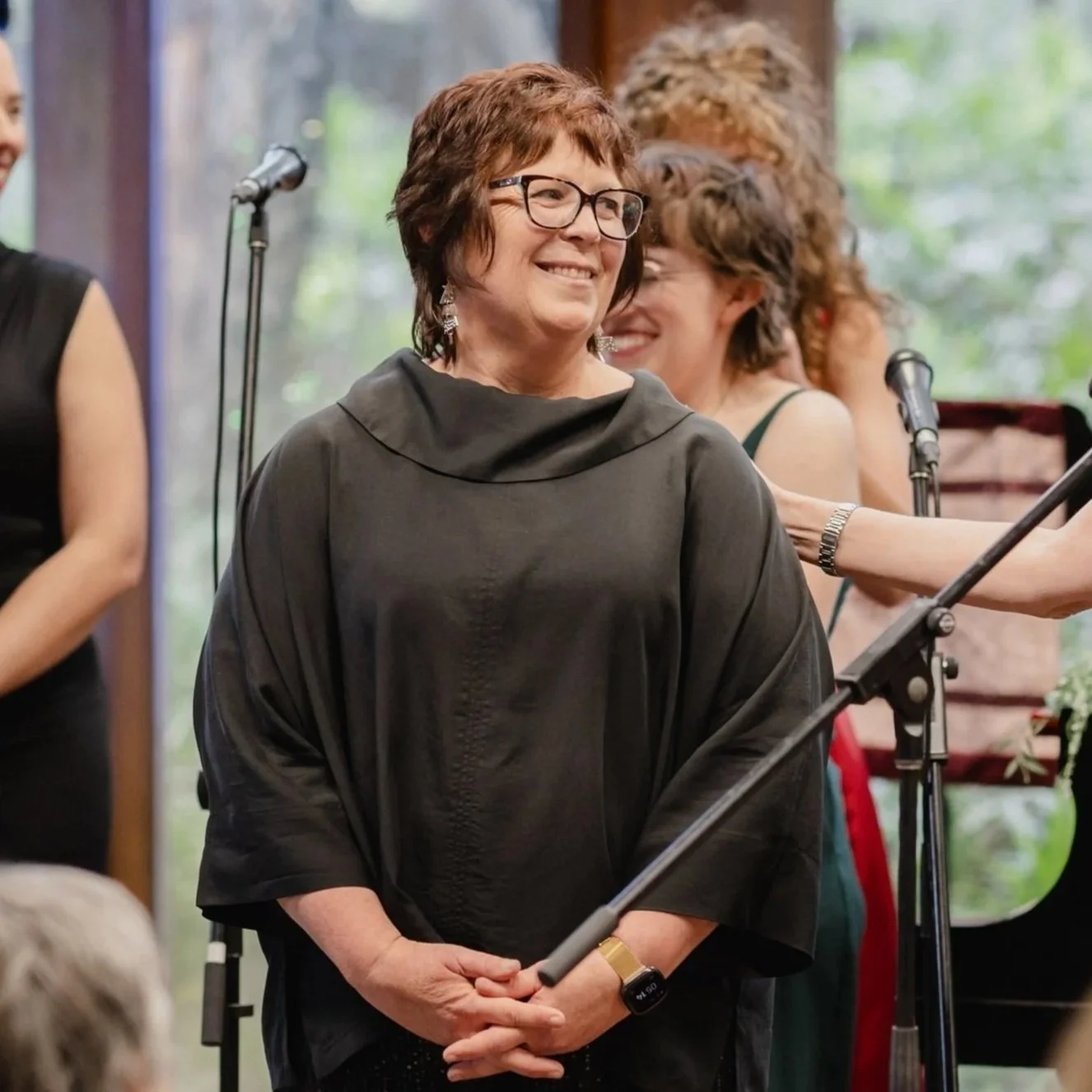
Stephanie Nicholls
Piano